
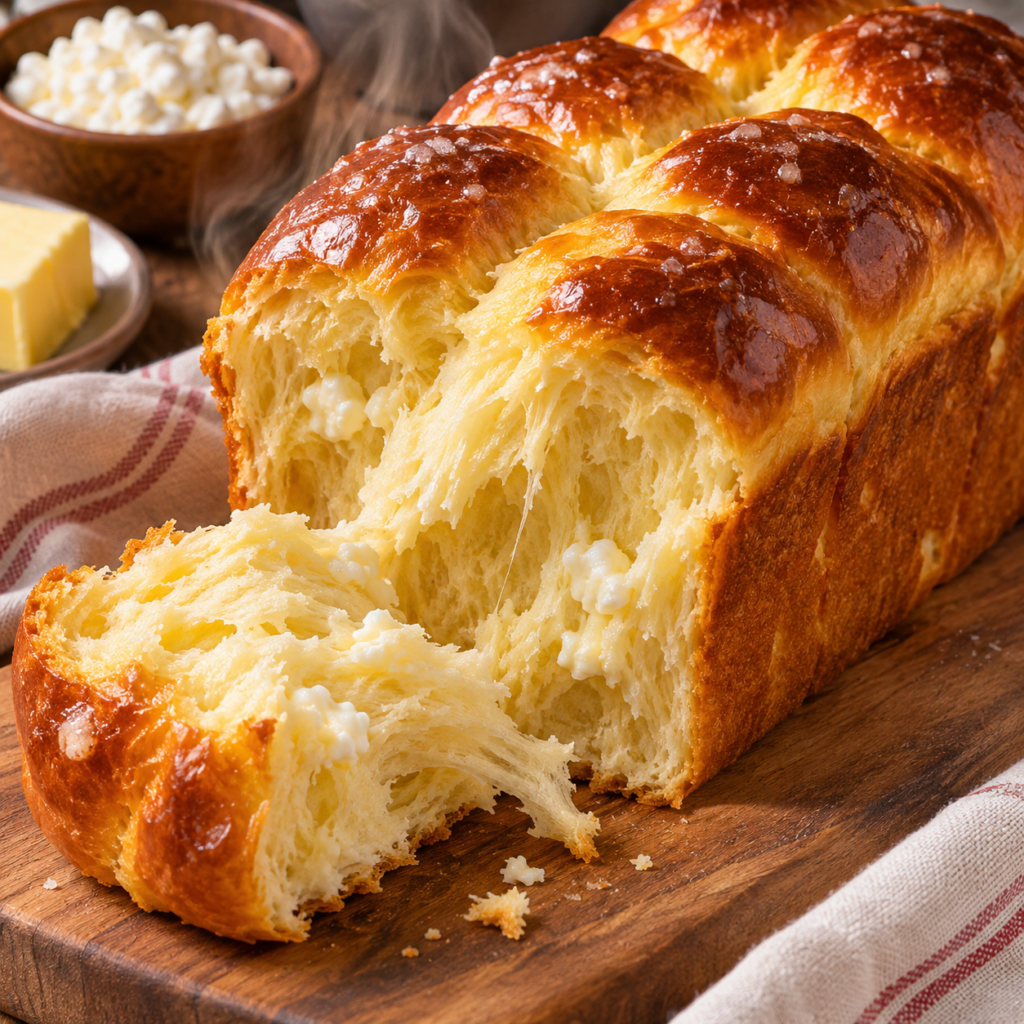
Golden Cottage Cheese Buttery Brioche Loaf – Warm Fluffy Tear provides the ultimate baking experience by combining rich, dairy-infused hydration with a tender, professional-grade crumb. This recipe utilizes high-quality cottage cheese to introduce a unique depth of flavor and a soft, airy structure that stays moist for days. You will achieve a bakery-quality result right in your own kitchen by following these precise methods.
Recipe Overview
| Category | Details |
|---|---|
| Prep Time | 30 minutes |
| Cook Time | 35 minutes |
| Total Time | 3 hours 5 minutes |
| Servings | 10 servings |
| Difficulty | Intermediate |
| Cuisine | French-Inspired |
Why This Recipe Works
This recipe works because the cottage cheese acts as a secret weapon, providing essential moisture and a delicate tang that cuts through the richness of the butter. Unlike traditional brioche, which relies solely on eggs and heavy cream, this method creates a more resilient dough that is significantly easier to handle during the shaping process.
My personal experience with this loaf confirms that it produces the perfect ‘pull-apart’ texture every time. The fermentation process is enhanced by the proteins in the cheese, resulting in a beautiful, golden-brown crust that hides an incredibly light, cloud-like center. It remains my go-to choice for Sunday brunches and special family gatherings.
Ingredients
| Ingredient | Quantity | Notes |
| All-Purpose Flour | 4 cups | Bread flour can be substituted |
| Cottage Cheese | 1 cup | Full-fat, blended until smooth |
| Unsalted Butter | 1/2 cup | Softened to room temperature |
| Granulated Sugar | 3 tbsp | Adds slight sweetness |
| Active Dry Yeast | 2 1/4 tsp | Ensure it is not expired |
| Eggs | 2 large | Room temperature |
| Salt | 1 tsp | Fine sea salt preferred |
Step-by-Step Instructions
Activating the Dough
- Combine the warm water and yeast in a small bowl, letting it sit for five minutes until frothy.
- Blend the cottage cheese in a food processor until completely smooth to ensure uniform texture.
- Mix the flour, sugar, and salt in a large stand mixer bowl using a dough hook.
- Add the yeast mixture, eggs, and blended cottage cheese to the dry ingredients, mixing on low until a shaggy dough forms.
Kneading and Rising
- Incorporate the softened butter into the dough one tablespoon at a time while the mixer runs on medium speed.
- Knead the dough for eight to ten minutes until it becomes smooth, elastic, and pulls away from the sides of the bowl.
- Place the dough in a greased bowl, covering it with a warm towel to rise in a draft-free spot for 90 minutes.
Shaping and Baking
- Punch down the risen dough and divide it into three equal balls, placing them into a greased loaf pan.
- Proof the shaped dough for an additional 45 minutes until it doubles in size.
- Brush the top with an egg wash before baking at 350°F (175°C) for 35 minutes until golden.
- Cool the loaf on a wire rack for at least 20 minutes before attempting to tear or slice.
Chef Tips for Perfect Results
- Blend the cottage cheese thoroughly to prevent large curds from interfering with the uniform crumb structure.
- Maintain a room temperature for your ingredients to ensure the yeast remains active throughout the rising process.
- Use an instant-read thermometer to check the center of the loaf for an internal temperature of 190°F.
- Do not rush the final proofing stage, as this is critical for achieving that signature ‘warm fluffy tear’ texture.
Common Mistakes to Avoid
- Over-flouring the workspace prevents the dough from sticking but often results in a dry, dense loaf.
- Using cold butter causes the dough to remain lumpy and prevents even distribution of fat during the kneading process.
- Insufficient kneading results in poor gluten development, preventing the loaf from rising properly in the oven.
- Cutting the bread while it is steaming hot leads to a gummy interior that feels undercooked despite being fully baked.
Variations and Substitutions
| Ingredient | Substitution | Impact on Flavor |
| Butter | Ghee | Nutty, intense richness |
| Sugar | Honey | Deeper floral notes |
| Cottage Cheese | Greek Yogurt | Increased tang and acidity |
Frequently Asked Questions
Can I use low-fat cottage cheese in this recipe?
Yes, you can use low-fat cottage cheese, though the final texture may be slightly less velvety than the full-fat version. The moisture content remains largely the same, ensuring your bake is still successful.
How do I know when the bread is fully baked?
The bread is fully baked when the crust is a deep golden brown and the internal temperature reaches 190°F. Tapping the bottom of the loaf should produce a hollow sound, indicating a properly set structure.
Can I prepare this dough the night before?
Yes, you can perform the first rise in the refrigerator overnight to develop more complex flavors. Simply bring the dough to room temperature before shaping and proceeding with the final proof.
Why is my dough not rising properly?
Your dough may not be rising if the yeast was expired or if the room temperature is too low. Always test your yeast by ensuring it becomes foamy in warm water before adding it to your flour.
What is the best way to serve this brioche?
The best way to serve this loaf is while it is still warm, ideally torn by hand into chunks. This preserves the delicate fluffy interior and provides the most satisfying experience.
This Golden Cottage Cheese Buttery Brioche Loaf – Warm Fluffy Tear is truly a masterpiece of home baking. By mastering the balance of protein-rich cottage cheese and high-fat butter, you create a bread that elevates any meal. Follow these steps, enjoy the process, and savor the incomparable aroma of fresh brioche cooling on your counter. Happy baking!
PrintGolden Cottage Cheese Buttery Brioche Loaf

Experience the ultimate brioche loaf, where rich, dairy-infused hydration meets a professional-grade, cloud-like crumb. By incorporating blended cottage cheese, this loaf achieves a unique depth of flavor and a superior moist texture that stays fresh for days. It is the perfect centerpiece for Sunday brunch, offering a delicate tang that beautifully balances the richness of the butter, resulting in a golden-brown crust and an incredibly soft, pull-apart center that will impress any bread lover.
- Prep Time: 30
- Cook Time: 35
- Total Time: 185
- Yield: 10 servings
- Category: recipe index
- Method: Baking
- Cuisine: French-Inspired
- Diet: Vegetarian
Ingredients
4 cups all-purpose flour
1 cup cottage cheese, blended until smooth
1/2 cup unsalted butter, softened
3 tbsp granulated sugar
2 1/4 tsp active dry yeast
2 large eggs
1 tsp fine sea salt
1/2 cup warm water
Instructions
Combine warm water and yeast in a small bowl and let sit for 5 minutes until frothy.
Blend cottage cheese in a food processor until completely smooth.
Mix flour, sugar, and salt in a stand mixer bowl using a dough hook.
Add the yeast mixture, eggs, and blended cottage cheese to the dry ingredients, mixing on low until a shaggy dough forms.
Incorporate softened butter one tablespoon at a time while mixing on medium speed.
Knead the dough for 8 to 10 minutes until smooth and elastic.
Place dough in a greased bowl, cover, and let rise in a warm spot until doubled in size.
Shape the dough into a loaf and place into a greased loaf pan.
Let the loaf rise for a second time until puffy.
Preheat oven and bake at 375°F for 35 minutes or until golden brown and hollow sounding when tapped.
Notes
Bread flour can be substituted for all-purpose for a chewier texture. Ensure the cottage cheese is fully smooth to avoid lumps in the dough. Store in an airtight container at room temperature for up to 3 days or freeze for longer storage.